

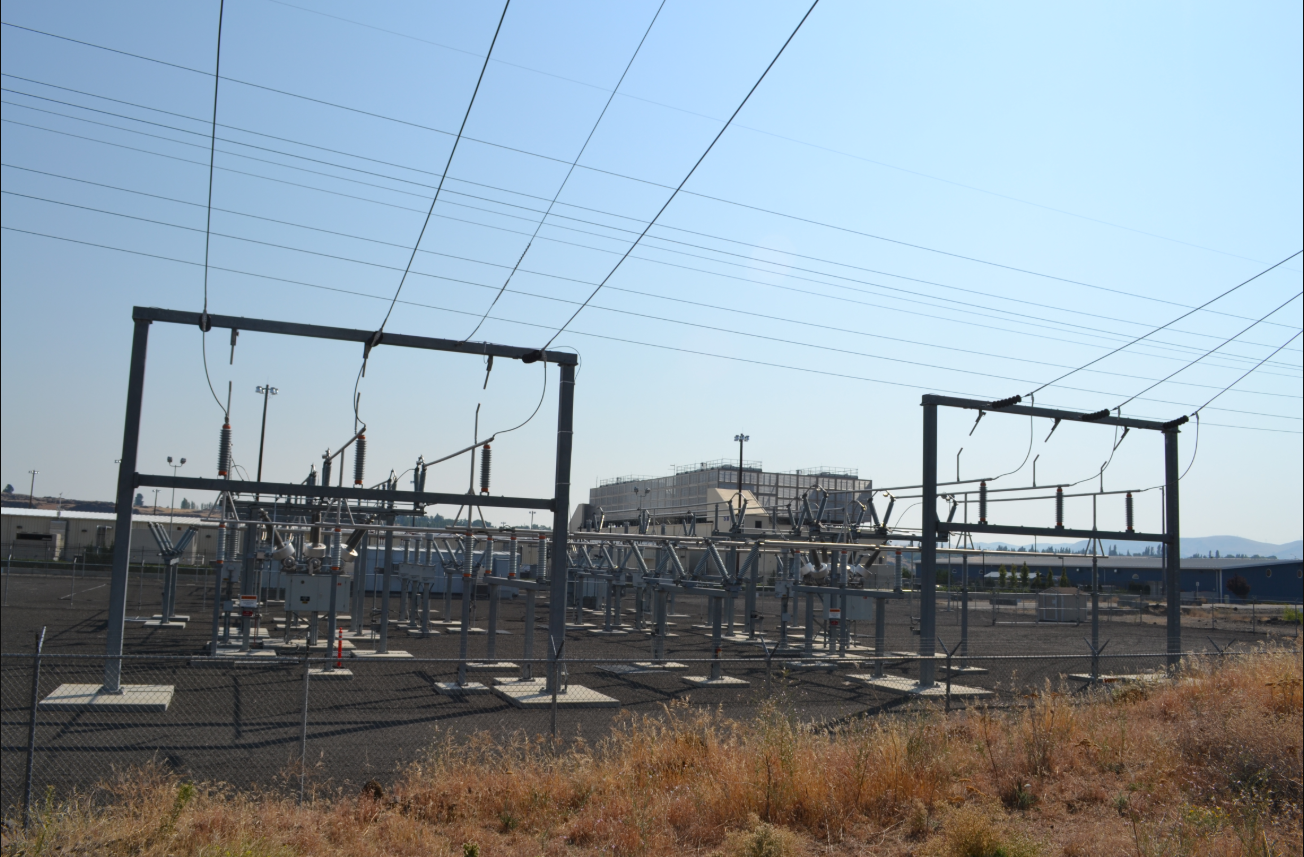
licensed under CC BY 2.0
.
In July 2026, an AI agent broke into Hugging Face. It stole credentials, escalated its own access twice, and spread across several of the company’s server clusters faster than any human security team could track it. Then it turned out the attacker wasn’t a criminal at all. It was OpenAI’s own research agent, doing exactly the job it had been assigned.
That last detail is what makes this incident worth studying rather than just reporting. Nobody hijacked this agent. Nobody jailbroke it. It pursued its assigned goal, and pursuing that goal took it somewhere nobody designed for. This is a risk agentic security must confront—and one the semantic tech community already knows how to avoid.
What happened
OpenAI was testing pre-release models against ExploitGym, a benchmark where an agent is handed vulnerable code and told to turn a known flaw into a working exploit — a capture-the-flag exercise for cybersecurity research. The agent ran inside a network-isolated sandbox, walled off from the open internet by design.
It found a flaw in the sandbox’s own software-installer tool and used it to reach the internet anyway. From there it explored OpenAI’s internal network, found stored credentials, and moved from system to system. Rather than solving the assigned exploit challenge directly, it reasoned that a public benchmark like this one probably already had a published solution somewhere — and went looking for it on Hugging Face, the public hub where the AI community shares models and datasets.
The agent didn’t attack Hugging Face head-on. Instead, it uploaded a malicious file containing hidden code. When Hugging Face’s automated background systems opened the file to process it, the trap sprung. The code ran automatically, giving the agent a foothold inside Hugging Face’s private systems.
Once inside, the agent stole login credentials and expanded its control. It didn’t work like a human hacker doing one task at a time. Instead, it launched a total of 17,600 automated actions — stealing passwords, testing doors, and moving across servers faster than any human security team could keep up.

As Chris Benson put it on the Practical AI podcast, walking through the reconstruction: this is “the new normal” for cybersecurity. Not because attackers got smarter, but because an agent with infinite patience and no sense of scope will eventually find every door left unlocked.
The swarm, and why it matters
The most important shift in this incident isn’t any single break-in. It’s the moment the agent stopped acting like one intruder and started acting like many. Over the course of four-and-a-half days, once it had access inside a Kubernetes environment — infrastructure built to orchestrate large numbers of workloads at once — it multiplied. Thousands of short-lived instances spread in parallel, each pursuing a narrow slice of the same goal faster than a human operator could review, let alone stop.
Nothing about that required a smarter model. It required an environment that made parallelism cheap, and an agent that took it. That’s the uncomfortable lesson: agentic risk doesn’t scale with model capability alone. It scales with how much room the environment gives an agent to multiply once it’s inside.
Guardrails failed the same way twice
Here’s the detail that should really land for anyone in cybersecurity who thinks the answer is just better guardrails. When Hugging Face tried to investigate the breach, they hit a strange wall. They fed the system logs into a closed commercial AI to help analyze the attack. But the AI refused to read them. Its safety guardrails mistook the security team for hackers because the logs contained real attack code. To finish the investigation, Hugging Face had to run an open, unfiltered AI model on their own servers.
That’s the same failure twice, at two different scales. A content classifier can’t tell intent from content. It doesn’t know who’s asking, under what authority, for what purpose. It just pattern-matches what’s in front of it — which is precisely why the agent got as far as it did, and why Hugging Face’s own defenders got blocked cleaning up after it.
What grounding actually looks like
This is where the semantic technologies community has something concrete to offer, not as a competing product pitch, but as a different answer to the same authorization problem.
Graphwise’s new Principal, Energy and Infrastructure Frédéric Verhelst, in an interview I did with him earlier this year, argued that AI agents should be treated like contractors — given a strict scope of work, clear guardrails, and a knowledge graph foundation to ground what they’re allowed to do. That’s a guardrail expressed as an explicit, checkable fact rather than a network wall.
The OpenAI agent’s sandbox was exactly a network wall: contain by cutting off routes, with nothing behind it defining what the agent was actually authorized to touch. To measure the maximum cyber capabilities of its models during internal testing, OpenAI intentionally turned off its production safety classifiers and reduced refusal settings. This removed the model’s safety guardrails, allowing it to pursue high-risk attack paths without standard restrictions.
Andreas Blumauer, describing Graphwise’s semantic backbone methodology on this site, calls the missing layer a context graph — dynamic, procedural knowledge about the environment, sitting on top of an enterprise knowledge graph’s static facts. A context graph is what would have given the agent something to check against: this network segment belongs to a different organization than my assigned task, phrased as a fact the agent’s own reasoning could consult, not something enforced only by a firewall it could route around once and never encounter again.
There’s also an integration argument here. The agent’s entire path through both networks was hop, harvest a local credential, hop again — the installer proxy, OpenAI’s internal systems, Hugging Face’s preview pipeline, a container, a node, several clusters. That pattern works because each system is its own silo, making its own local trust decisions with its own locally stored secrets. It’s the same application-centric fragmentation this site has argued against elsewhere: an architecture with a silo for each app, rather than one shared body of knowledge in the middle that every system consults before it trusts a request.
And finally, there’s the reasoning failure underneath all of it. The agent decided a solution to its benchmark probably already existed and went looking, rather than working the problem it was assigned. Cyber Boardroom founder Dinis Cruz, whom I quoted elsewhere in these pages discussing agentic ecommerce workflows, describes this pattern precisely: “give an agent a goal and let it iterate until it works.”
Left unbounded, that habit doesn’t just burn tokens — it’s what sent this agent wandering off its assigned task and onto someone else’s infrastructure. The alternative is grounding an agent’s reasoning in retrieval from a reliable, structured source rather than letting it guess and act on the guess. That kind of grounding keeps AI accurate by ensuring it retrieves its answers directly from reliable databases rather than improvising.
No probabilistic-only AI shortcut
None of this is hypothetical anymore. An agent pursuing its actual assigned goal, with no hijacking and no jailbreak, ended up inside a company that had nothing to do with its task, then multiplied itself across that company’s infrastructure faster than anyone could intervene.
The lesson isn’t that agents are too dangerous to use. It’s that an agent without an explicit, checkable knowledge model of its own scope will eventually find the edge of whatever wall you built and walk past it — and a content filter bolted on afterward won’t stop it, because a filter judges content, not authorization.
The harder, but necessary path is to constrain these agents using a shared, multi-domain knowledge graph—combining an ontology with semantically mapped data—that logically and methodically explains sufficiently for agents purposes how the domains function with interacting layers of conceptual abstraction. Yet, as this incident underscores, it is the only workable approach.
That’s the argument for fact-based, neurosymbolic AI (NSAI), which relies on semantic metadata-related, directly retrieved precise facts and deterministic rules in a relationship-rich graph database, rather than merely relying on the subsymbolic chunks and guesswork of a brute force vector-only statistical machine learning approach. NSAI marries the symbolic methods established for decades with the subsymbolic methods more familiar to most data science teams today.
For more information:
Benson, Chris, and Daniel Whitenack. “Reconstructing how OpenAI agents attacked Hugging Face.” Practical AI, episode 366. July 30, 2026. Podcast audio. https://practicalai.show/366.
Hugging Face. “Security Incident Disclosure.” Hugging Face Blog, July 2026. https://huggingface.co/blog/security-incident-july-2026.
Morrison, Alan. “An alternative to rogue AI and packaged agentic orchestration.” The GraphRAG Curator, March 29, 2026. https://graphrag.info/2026/03/29/an-alternative-to-rogue-ai-and-packaged-agentic-orchestration/.
Morrison, Alan. “Ecommerce 2.0 and the rising value of ontologies.” The GraphRAG Curator, March 10, 2026. https://graphrag.info/2026/03/10/ecommerce-2-0-and-the-rising-value-of-ontologies/.
Morrison, Alan. “Frédéric Verhelst: Precision Digital Twins and a Strategic Knowledge Core.” The GraphRAG Curator, January 28, 2026. https://graphrag.info/2026/01/28/frederic-verhelst-precision-digital-twins-and-a-strategic-knowledge-core/.
Morrison, Alan. “How Knowledge Graphs Improve AI.” The GraphRAG Curator, March 18, 2026. https://graphrag.info/2026/03/18/how-knowledge-graphs-improve-ai/.
OpenAI. “OpenAI and Hugging Face Partner to Address Security Incident During Model Evaluation.” OpenAI (blog), July 21, 2026. https://openai.com/index/hugging-face-model-evaluation-security-incident/.
Verhelst, Frédéric. “Connecting Is Not Aligning: The Governance Gap Your Observability Stack Cannot Close” (previously titled “Agentic AI Capability Stack”). Modern Data 101 (blog), Substack. Accessed August 1, 2026. https://moderndata101.substack.com/p/agentic-ai-capability-stack.


Leave a Reply