

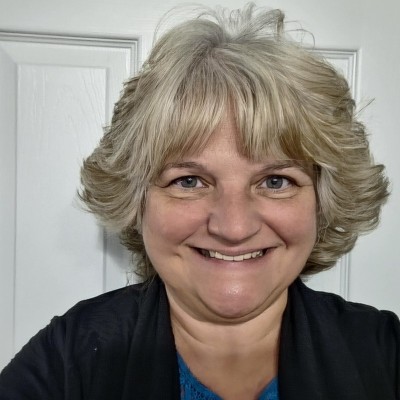
Cheryl Dunn, an accounting professor at Grand Valley State University and ontologist at Semantic Arts, argues that traditional accounting is broken in a way that matters deeply for AI — and that a smarter architecture can fix it.
The core problem: conventional accounting systems catch business transactions in rigid buckets (accounts payable, sales, inventory) where they lose their original context. By the time data reaches a general ledger, its meaning has been contaminated by accrual assumptions and organizational silos. As Dunn puts it, quoting her co-author Dave McComb: “Ambiguity is AI’s kryptonite.” Poorly structured, context-stripped data means AI agents can’t make sense of what actually happened in a business.
Cheryl and Dave’s forthcoming book The Future of Accounting unlocks the power of an agent-friendly methodology Cheryl ironically learned about as a student at Michigan State back in the 1980s.
Their solution, rooted in Bill McCarthy’s REA model (Resources, Events, Agents), is to “freeze each raindrop” — tag every transaction at the moment it occurs with full context: what resource was involved, what event took place, who the agents were, and crucially, why. A purchase of chocolate means something different if it’s a manufacturing input versus a customer giveaway. The person making the decision knows the intent; current systems throw that away.
This “frozen raindrop” architecture, implemented as a knowledge graph, creates a single source of truth with a complete audit trail from original transaction to final financial statement. Accounting becomes a byproduct of business events rather than a separate system that distorts them.
For AI, the payoff is significant: agents operating on this kind of clean, unambiguous, richly contextual data can reason reliably, automate workflows accurately, and support continuous auditing in real time — rather than fighting through layers of approximation and accumulated abstraction that plague today’s ERP systems.
YouTube Interview Video
Edited Interview Transcript
Alan Morrison: Welcome to the GraphRAG Curator podcast. I’m Alan Morrison, and I am pleased to introduce Cheryl Dunn, an accounting professor at Grand Valley State University.
Alan Morrison: Cheryl is currently on leave, working currently as an ontologist for Semantic Arts. Welcome, Cheryl. Tell us about your journey. Your book, The Future of Accounting, addresses why a CPA and accounting professor would delve into the technicalities of ontology. What have you discovered over the past few years?
Cheryl Dunn: Thank you, Alan. I am delighted to be here. My journey began as a student at Michigan State University under Professor Bill McCarthy. I initially debated between majoring in accounting or computer science. Michigan State offered an accounting information systems major that combined both fields. McCarthy taught the Resources-Events-Agents (REA) model, which applied relational database theory to accounting. He argued that accounting for all company events, resources, and agents allows a firm to capture all necessary information for management, marketing, and accounting. McCarthy published his landmark REA paper in 1982, anticipating Enterprise Resource Planning (ERP) systems.
Alan Morrison: When did you start your career?
Cheryl Dunn: I worked for Coopers & Lybrand in 1988 and 1989.
Alan Morrison: That was during the mostly standalone PC era. Local Area Networks existed, but the internet was years away.
Cheryl Dunn: Yes.
Alan Morrison: The internet was certainly years away.
Cheryl Dunn: Correct. I owned a Zenith PC with an 8088 processor and a 20-megabyte hard drive. At the time, most systems used dual floppy disk drives. Our office had 50-pound “suitcase” computers, which were cumbersome but technically portable.
I grew tired of manual calculations. I needed to perform a fluctuation analysis, which requires comparing year-over-year balance sheet and income statement line items. I requested to use a computer and a spreadsheet—specifically Lotus 1-2-3—to automate the formulas. My supervisor resisted, fearing it would take too long or be too complex for others to use.
I told her I would enter the information, then create formulas for the changes and percentages. The following year, an employee would only need to move the current year’s data into the previous year’s column and type the new figures. The system would automatically recalculate all dollar value and percentage changes.
I promised to finish within the allotted time and write a manual. I even offered to print the results and paste them onto green ledger paper to maintain the traditional appearance. I demonstrated how the spreadsheet automatically recalculated dollar and percentage changes; her jaw dropped. I realized many professionals lacked the digital skills I learned at Michigan State, confirming I needed a PhD to teach accounting majors these essential digital skills. In 1988, Michigan State’s curriculum led the profession.
Cheryl Dunn: I returned to Michigan State for my PhD because other programs lacked an accounting information systems emphasis. Bill McCarthy chaired my dissertation. I focused on behavioral research to test how people interacted with the REA model, addressing a significant research gap. We called REA a “semantic model of accounting phenomenon.” When I discovered semantic technologies, they appeared consistent with REA. ,
[REA stands for Resource, Event, Agent — three things that every business transaction involves:
- Resource: Something of economic value (cash, inventory, raw materials, equipment)
- Event: Something that happens which affects those resources (a sale, a purchase, a payment)
- Agent: The people or organizations involved (a customer, a vendor, an employee)
Instead of recording transactions as debits and credits (the traditional accounting way), REA says: just record what actually happened in the real world, and the accounting numbers follow naturally from that. For that reason, REA is particularly suited to accounting in the era of agentic AI. An agent executing a procurement workflow can natively record: resource (inventory), event (purchase), agent (vendor). No translation layer needed. The accounting emerges from the facts, rather than requiring the agent to apply accounting rules upfront.]
My dean funded my attendance at a practitioner-focused semantic technology conference, where I met Dave McComb from Semantic Arts.
Cheryl Dunn: McComb introduced gist, an upper-level ontology. Its overlap with REA impressed me. I asked Dave why ERP packages like SAP require 20,000 tables when a company should only need 400. He explained that these systems copy everything. This revelation convinced me that relational databases were insufficient and that semantic technologies were necessary. After serving as a department chair at Grand Valley, I attended the 2019 Designing and Building Business Ontologies workshop.
Cheryl Dunn: The workshop demonstrated that we could implement REA using semantic tools like Protege and SPARQL. The theory holds: we capture economic, commitment, and instigation events and relate them to resources and agents. It functions like a knowledge graph, but with better data capture.
Cheryl Dunn: I returned from the conference realizing I had the tools I could use. I learned Protege and how to build SPARQL queries, but only brushed the surface. The department chair job intervened, and I got caught up with academic work, deciding that the theory research would have to wait.
Cheryl Dunn: When I had the chance to apply for a sabbatical, I realized I could spend a whole semester away from teaching and administrative work. I contacted Dave, proposing to work for Semantic Arts as an ontologist for a semester. I needed to apply the concepts every day to retain the knowledge, since I forgot what I learned after only attending a week-long conference.
Cheryl Dunn: I planned a sabbatical to work for Semantic Arts. Although COVID-19 delayed the sabbatical, Dave and I began writing a book on data-centric accounting. This approach differs slightly from REA. While REA uses “duality” to connect increments and decrements (like cash receipts and sales), implementing that bi-directionality in directional semantic graphs is difficult. Instead, we center our model on commitments.
Cheryl Dunn: A commitment, such as a sales order, generates an obligation to deliver and a right to receive payment. By tying these to the commitment, we handle directionality easily. We track fulfillments until the transaction is complete.
Alan Morrison: Dave McComb’s philosophy of data-centricity, detailed in Software Wasteland, highlights the waste and fragmentation in application-centric software. How does your book fit into this series?
Cheryl Dunn: Data-centricity avoids application-centric silos. Application-centricity forces developers to copy database tables for every new application, creating an integration nightmare.
Alan Morrison: Dan DeMers developed a zero-copy integration standard in Canada to address this duplication, but the software industry’s momentum makes change difficult.
Cheryl Dunn: That is correct. Dave gave a session called “Zero Copy Integration” at a conference a couple of years ago. He argues that a data-centric architecture creates one model for the firm.
Cheryl Dunn: This single source of truth eliminates copies. Manipulations happen at the interface level, not the data level. Semantic technology makes this interoperability easier than relational databases.
In data-centric accounting, we track buy, sell, and make processes. Each process follows a pattern: a commitment (mutual or internal) creates rights and obligations. Accounting becomes a byproduct of business events, rather than a separate, ledger-focused system that contaminates data with accrual assumptions.
Alan Morrison: This clarifies the process.
Cheryl Dunn: With a knowledge graph, it is simply a matter of connecting nodes that represent the same thing. Data-centric accounting attempts to keep track of all business process events and recognize the common pattern across them.
Cheryl Dunn: All companies have three main process types: buy, sell, and make. The “make process” does not always mean manufacturing a product.
The make process might involve selling consulting services, where you create value for the customer. Internal make processes also exist for things like equipment maintenance. All these processes follow the same pattern: a commitment is made, either mutual (between the firm and an external party) or internal (between departments). This commitment is an agreement to get something and give something up.
Cheryl Dunn: Once we store the agreement, including necessary connections to resources, agents, and other pieces, we track the rights and obligations generated by that commitment and the fulfillment of those. Each stage of the process results in different accounting implications.
Cheryl Dunn: This is a business issue, not an accounting issue. We build business systems that generate accounting records, rather than starting with accounting and complicating things for the rest of the business. General ledger-focused systems contaminate data with accrual accounting assumptions when data is entered, making it unusable for many other company purposes. Consequently, other departments need separate systems to track information in a different format than the accounting system requires.
Alan Morrison: Capturing events, resources, and agents at the source creates a trustworthy, auditable system. This ties accounting back to original business motivations.
Cheryl Dunn: Precisely. Dave uses a “raindrop” analogy. Traditional systems catch transaction “raindrops” in buckets like accounts payable or production, where they mix and lose their identity. These buckets pour into a general ledger bucket, destroying the audit trail. We propose “freezing” each raindrop—tagging every transaction with specific details.
Cheryl Dunn: This creates a full audit trail from initial event to financial statement. The business participants, who know why they bought a resource (e.g., chocolate for manufacturing versus chocolate for a marketing tour), classify the data immediately.
Cheryl Dunn: You can connect those frozen raindrops with a graph. This provides full provenance and a complete audit trail from the initial transaction to the final financial statement number. Accounting becomes a byproduct of the business, which is how it should be, rather than driving it.
Cheryl Dunn: The people involved in the business events, who make the decisions and commitments, are the most qualified to classify the transaction’s intent. For example, they can clarify if buying chocolate was intended as a raw material ingredient for manufacturing cookies or if it was a supply for customer giveaways on a factory tour.
Cheryl Dunn: The classification matters for financial statements. Accountants should not classify events months later. Data-centric accounting preserves the original context.
Alan Morrison: So this is data-aware and knowledge-aware accounting. The term “context graphs” has gained momentum since a VC firm blogged about it last December. Dave’s raindrop analogy suggests collecting transactions by context. You need to preserve the original context while also attaching accounting contexts, such as for accounts payable, through tagging. Are you working on attaching these various contexts as an ontologist at Semantic Arts?
Cheryl Dunn: We are currently implementing this at Semantic Arts as a proof of concept. Dave noticed that Semantic Arts had about one system for every two employees—an integration mess. We are replacing QuickBooks, Pipedrive, and time management systems with a single data-centric architecture. Transitioning historical data from QuickBooks is challenging because the “raindrops” weren’t frozen, but we are moving forward.
Cheryl Dunn: We realized we needed three phases for data-centric accounting. Phase 1 retains some accounting artifacts, like accounts, but eliminates periodicity (the requirement to close temporary accounts like sales monthly). Since we tag transactions with dates, amounts, and resources, we can reassemble the data for any timeframe, removing the need for temporary accounts at the storage level; accounts only exist at the reporting level. We retain counterparty accounts for customers and vendors, which manifest as accounts payable and receivable. This gradual approach is necessary for companies transitioning from general ledger systems. Phase 2 moves to a robust data-centric format. Phase 3 involves a blockchain-style “helicopter view” where transactions are captured independently as an “exchange of goods or services for cash,” rather than an enterprise-centric “sale” or “purchase.” This independent view, a concept explored by the EU and the UNCFACT project, would allow taxing authorities to view transactions directly for real-time calculation. While some companies may resist this transparency, in theory, Phase 3 enables this level of detail.
Alan Morrison: This approach enables real-time reporting and fundamentally redefines application software.
Cheryl Dunn: That is true. Agents are only as effective as the data’s structure. If the data is poorly structured, agents cannot make sense of it. As Dave says, “ambiguity is AI’s kryptonite.”
Alan Morrison: Precision is vital.
Cheryl Dunn: We must ensure the data is structured correctly, eliminating any ambiguity about what it represents, so that agents can use it.
Alan Morrison: This is an argument for your accounting method.
Cheryl Dunn: Yes.
Alan Morrison: It’s an argument for the architecture that is implied by standards-based knowledge graphs.
Cheryl Dunn: Yes.
Alan Morrison: And it’s an argument to rewrite the application software so that it’s out of the way of this whole functioning of the graph-based system.
Alan Morrison: I am sure many people will resist this. Incumbents want to protect their products and recurring subscription fees. You have spoken with people in the EU and the UN about this. Who else is curious about this approach and thinks they could benefit?
Cheryl Dunn: The SEC is interested because of the potential for financial transparency. We expect large, privately held companies to adopt this first. Publicly traded companies may resist because they use “earnings management”—adjusting estimates like depreciation or bad debt allowances—to meet analyst expectations. Data-centric accounting eliminates this “fudging” by making every transaction traceable and allocating costs at the time of commitment. This transparency benefits society.
Alan Morrison: That makes sense.
Alan Morrison: This sounds like an immutable ledger. For auditing purposes, having a snapshot in time of every transaction, with variations or changes logged separately, seems essential. Is that what you are referring to with Phase III?
Cheryl Dunn: Yes. It facilitates “continuous audit,” an idea championed by researchers at Rutgers. Instead of auditing months after year-end, firms can audit throughout the year, making records available sooner.
Alan Morrison: Can you describe your day-to-day experience? Dave mentioned “eating the dog food”—that Semantic Arts is using this proof of concept internally to understand the system first. What is it like to work in a data-centric system? How is it different?
Cheryl Dunn: I advise developers on accounting policy. We use “intention” and “policy” to determine accounting treatment. Intention defines the resource’s use; policy defines the standard applied. Traditional systems force a choice between cash or accrual accounting at the start.
Cheryl Dunn: Data-centric accounting allows you to apply any policy—cash, accrual, GAAP, or IFRS—to the same frozen raindrops after the fact. It is much more efficient.
Cheryl Dunn: Accrual-based accounting recognizes revenue when a firm earns it. For example, if you ship goods today, you record the revenue immediately, increasing accounts receivable. When the customer pays later, you decrease the receivable and increase cash. Cash-basis accounting recognizes nothing until the cash arrives. These timing differences affect monthly or annual results.
Cheryl Dunn: Data-centric accounting allows a user to apply any policy—cash, accrual, GAAP, or IFRS—to the same recorded data. This flexibility is revolutionary.
Alan Morrison: This visibility prevents fraud rather than just detecting it. What are you planning over the next year?
Cheryl Dunn: We are seeking companies to implement data-centric accounting. We are presenting at workshops and conferences, such as the Knowledge Graph Conference in New York. I believe change will come from data scientists and software engineers who recognize that accounting is a business byproduct. I will remain in this ontology position at Semantic Arts through August 2027 to continue this work.
Alan Morrison: What was the feedback at the Knowledge Graph Conference?
Cheryl Dunn: The audience was very engaged. When I showed the frozen raindrops connected as a graph, several auditors and partners were stunned. The feedback was overwhelmingly positive.
Alan Morrison: Best of luck, Cheryl. The book is The Future of Accounting by Cheryl Dunn and Dave McComb. Visit semanticarts.com or find them on LinkedIn.
Cheryl Dunn: Correct. You can reach me at cheryl.dunn@semanticarts.com. We love discussing data-centric accounting!
Alan Morrison: Thank you for joining us.
Cheryl Dunn: Thank you, Alan.Benefits of Ontologies for Cross-Domain Data Sharing




Leave a Reply